Most robot demos look impressive until you notice what the robot can’t do. It hesitates at an oddly angled object. It fumbles anything soft. Ask it to work below the waist and it freezes. Google’s newly revealed Gemini Robotics 2 is designed to close exactly those gaps — and the details are worth paying attention to.
Why Hands Are the Hard Part
Gripping a steel wrench and gripping a ripe tomato require fundamentally different things from a hand. Too much force on the tomato and it’s done. Too little on the wrench and it slips. Human hands manage this constantly without thinking, because we have decades of tactile feedback baked into our motor control.
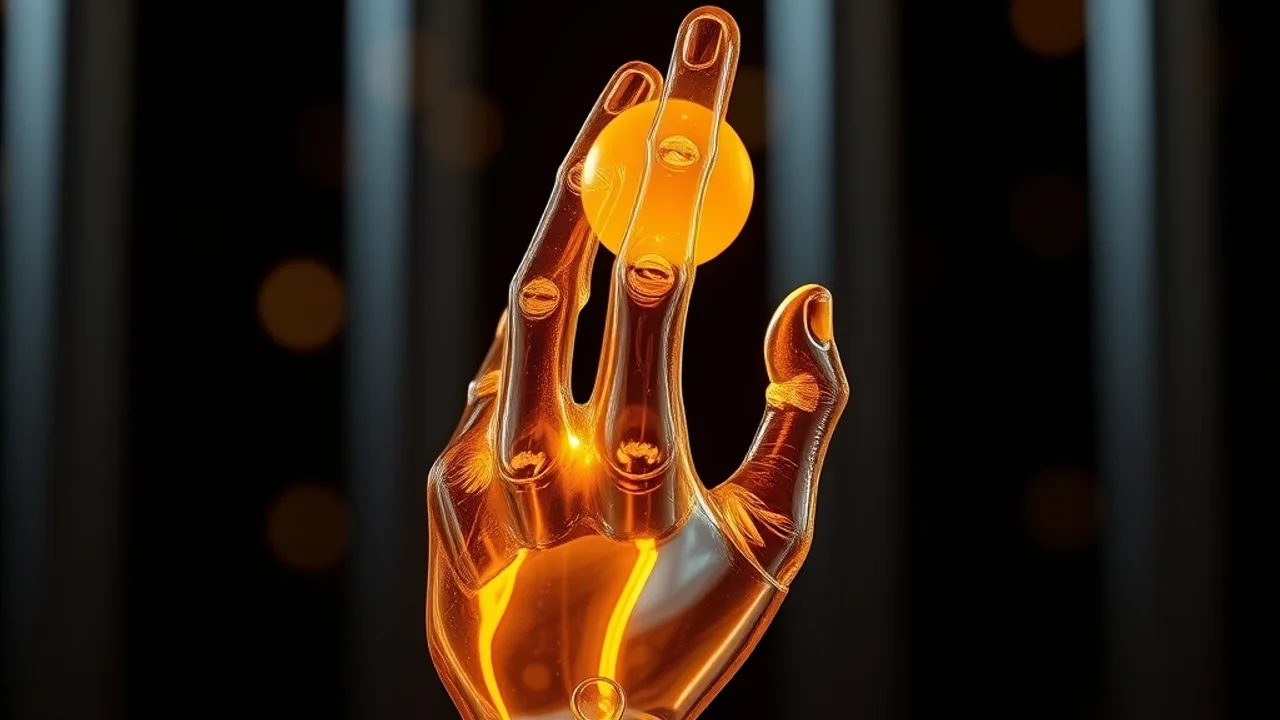
Robotic hands have historically cheated — using simple two or three-finger grippers that work fine in a warehouse but fail in any unstructured environment. Gemini Robotics 2 takes a different approach: 22 degrees of freedom across the hand, which is close to what human anatomy actually offers. That number matters because each degree of freedom is an independent axis of movement the system has to model, coordinate, and control in real time.
The practical results are striking. The robot can:
- Tie a trash bag into a knot (genuine dexterous manipulation, not a scripted trick)
- Seal a zip-lock bag along its full length
- Unscrew a standard light bulb without cracking it
- Pick individual grapes off a bunch without bruising them
- Pack objects into containers where clearance is tight
None of those tasks are flashy in isolation. Together, they represent a level of generalized hand control that previous humanoid robots have struggled to demonstrate outside carefully controlled conditions.
Full-Body Coordination, Not Just Arms
Earlier iterations of Google’s robotics work were largely waist-up systems. That’s a reasonable starting point — arms and hands do most of the manipulative work — but it creates an artificial ceiling. Real-world tasks often require a robot to crouch, reposition its feet, or use its lower body as a counterbalance while its arms are loaded.
Gemini Robotics 2 coordinates from feet to fingertips. The underlying AI model has to maintain a coherent picture of the robot’s full posture, not just the end effectors. That’s a substantially harder inference problem, and solving it opens up a wider range of environments where the robot can actually be useful — think loading a dishwasher, picking something up off the floor, or navigating a cluttered kitchen rather than a tidy assembly station.
Multi-Robot Collaboration
One of the more forward-looking aspects of Gemini Robotics 2 is that multiple robots running the same underlying model can communicate and divide labor on a shared task. Two robots moving a long piece of furniture, for example, need to agree on timing and force in real time — something that’s trivial for two humans and has historically been difficult to coordinate across separate robotic systems without heavy pre-programming.
If this capability scales cleanly, it changes the economics of deploying robots in environments where a single unit can’t do the job alone.
The Same AI, Different Bodies
One detail that tends to get buried in the hardware excitement: Gemini Robotics 2’s underlying model can be adapted to different robot body configurations in a matter of hours. That’s a meaningful contrast to traditional robotic systems, which are typically tuned from scratch for a specific mechanical platform.
This kind of cross-embodiment flexibility suggests Google is building toward a more general-purpose AI layer for robotics rather than a one-robot solution. For companies evaluating humanoid robots, it’s a sign that the software investment may transfer across hardware generations — which is exactly the kind of durability that makes a platform worth betting on.
On-Device Operation
Gemini Robotics 2 also includes an on-device inference mode that runs without a network connection. For industrial or sensitive environments where routing robot perception data through external servers is a non-starter, this matters. Latency is also lower, which is relevant for fast manipulation tasks where a few hundred milliseconds of lag can mean a dropped object or a missed grasp.
What to Watch Next
The leap from controlled demo to reliable real-world deployment is where most robotics announcements stall. The honest question with Gemini Robotics 2 isn’t whether the demos are real — they appear to be — it’s how performance holds up across the messy variation of actual environments: different lighting, unexpected objects, surfaces that aren’t clean and flat.
That’s the benchmark worth tracking. If the dexterous hand control and full-body coordination hold up outside Google’s labs, this is a meaningful step toward robots that can operate in ordinary human spaces rather than specially designed ones. Keep an eye on third-party testing and deployment reports as this rolls out further.